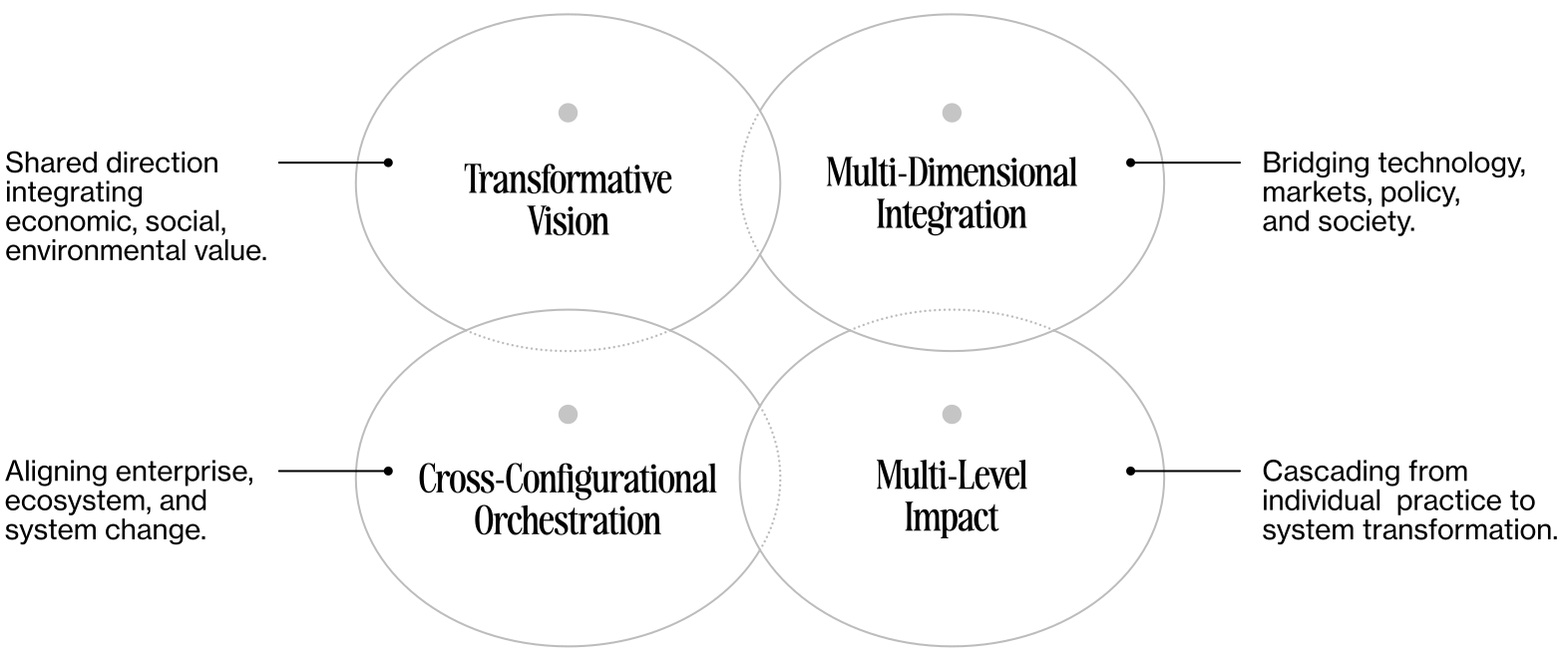
Nearly three decades after Clayton Christensen introduced disruptive innovation theory, something fundamental was shifting. Innovations addressing climate change, digital transformation, and sustainable development were not just disrupting markets or displacing incumbents - they were reconfiguring entire systems across technological, social, environmental, and economic dimensions simultaneously.
The simple question - How has disruptive innovation evolved since Christensen's original conceptualisation? - led to the discovery of an entirely new phenomenon requiring a new framework for understanding and orchestrating transformation at scale.
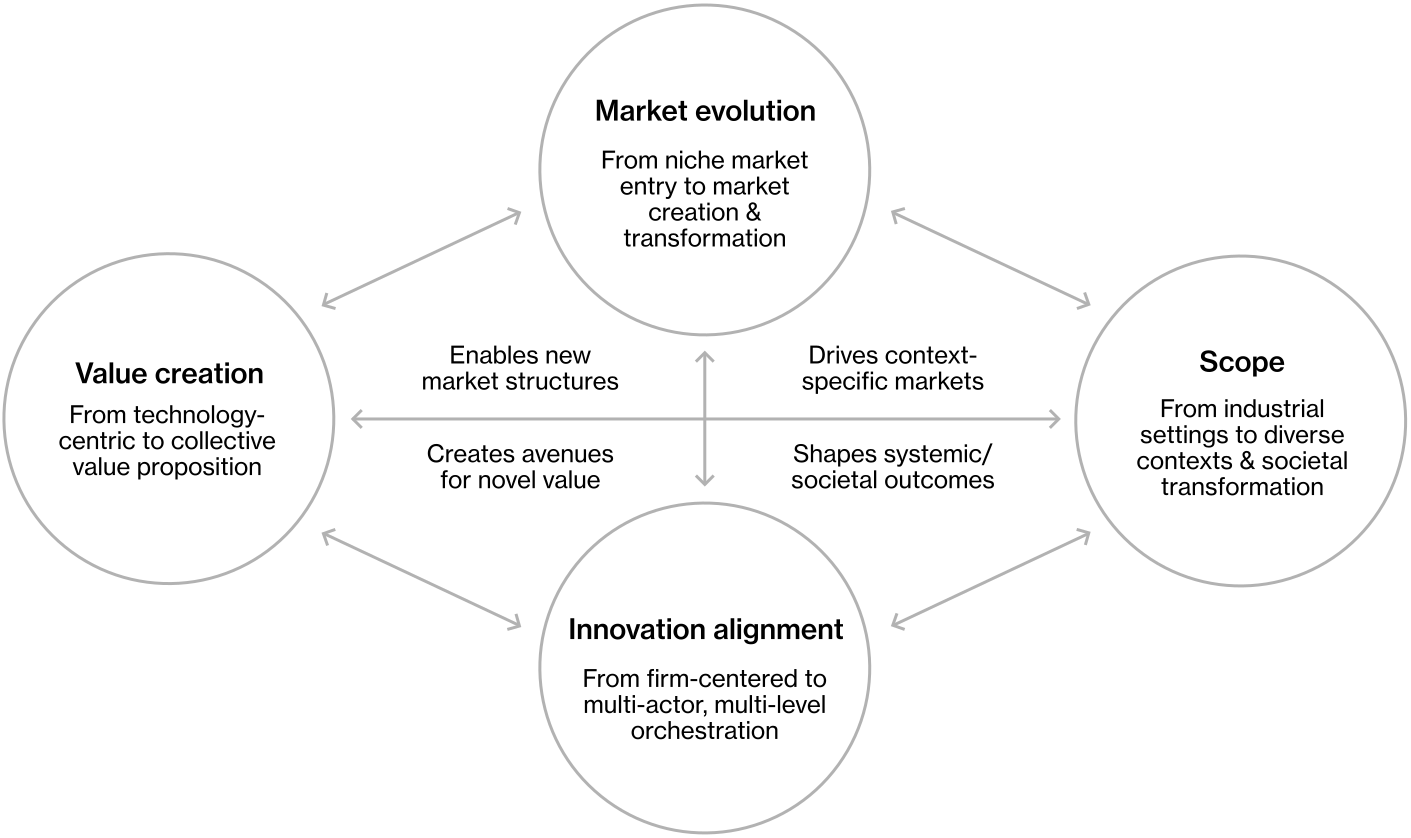
The first paper systematically analysed nearly three decades of disruptive innovation research (1995-2023), uncovering four fundamental dimensions along which the concept had expanded far beyond its original firm-centric, technology-focused origins:
Value Creation evolved from simple performance-price trade-offs to collective value propositions integrating economic, social, and environmental benefits across multiple actors.
Market Evolution shifted from niche market entry to active market creation and transformation—with innovators not just competing within markets but fundamentally reshaping market structures themselves.
Innovation Alignment progressed from firm-centred control to multi-actor, multi-level orchestration requiring coordination across organisational boundaries without hierarchical authority.
Scope expanded from industrial settings with commercial outcomes to diverse contexts—digital environments, resource-constrained settings, sustainability transitions—driving societal transformation at system-wide scale.
These four expansionary dimensions revealed something crucial: innovation wasn't just increasing in scope and complexity—innovation itself was changing. The research uncovered three profound shifts:
• From competitive disruption to collaborative transformation
• From static structures to dynamic processes
• From localised outcomes to systemic transformation
The second paper developed a configurational framework revealing that disruptive innovation doesn't follow a single trajectory but manifests through three distinct patterns, each with unique characteristics across five key dimensions: structure, value creation, competition, scale and scope, and capabilities.
The Enterprise-Led Configuration resembles Christensen's original concept—firm-centric innovation with centralised control, though acknowledging more sophisticated coevolutionary dynamics with incumbents and ecosystems.
The Innovation Ecosystem Configuration captures how innovation emerges from networks of interdependent actors creating value through distributed coordination, boundary-spanning propositions, and complex coopetition dynamics. This reflects contemporary platform and digital innovation.
The Socio-Technical System Configuration extends to transformation of entire systems—coordinating multiple ecosystems around grand challenges through deliberate multi-level governance, value-system-spanning creation, and policy-driven evolution.
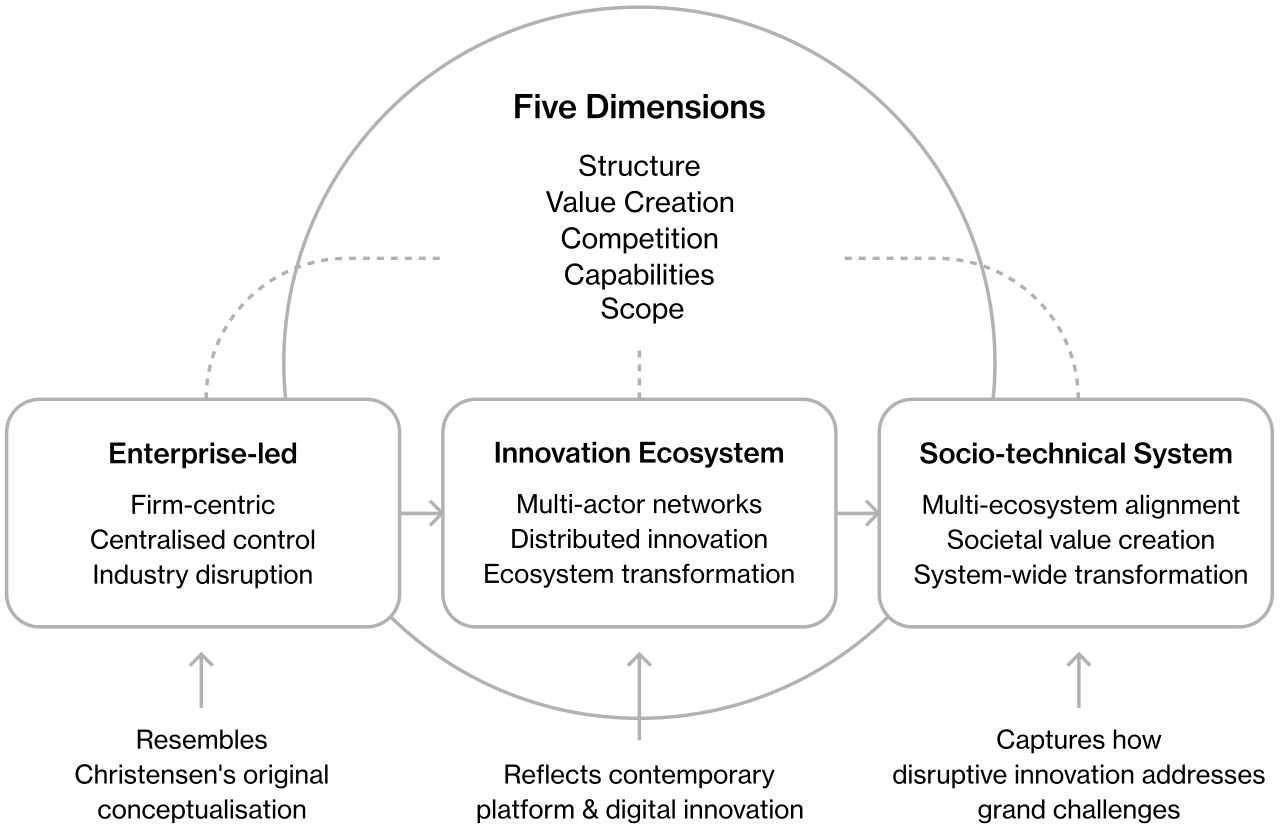
The configurations aren't sequential replacements but coexisting patterns suited to different challenges and contexts. More significantly, the research revealed that contemporary challenges increasingly demand cross-configurational orchestration—working across enterprise, ecosystem, and system levels simultaneously rather than selecting one pattern over others.
This insight pointed toward something beyond the configurations themselves: a higher-order capability for orchestrating innovation processes across boundaries.
The third paper examined how entrepreneurs actually orchestrate this cross-boundary transformation through an in-depth longitudinal study of Regen Farmers Mutual (RFM) in Australia—a case that embodied all the characteristics of what was emerging as "meta-innovation."
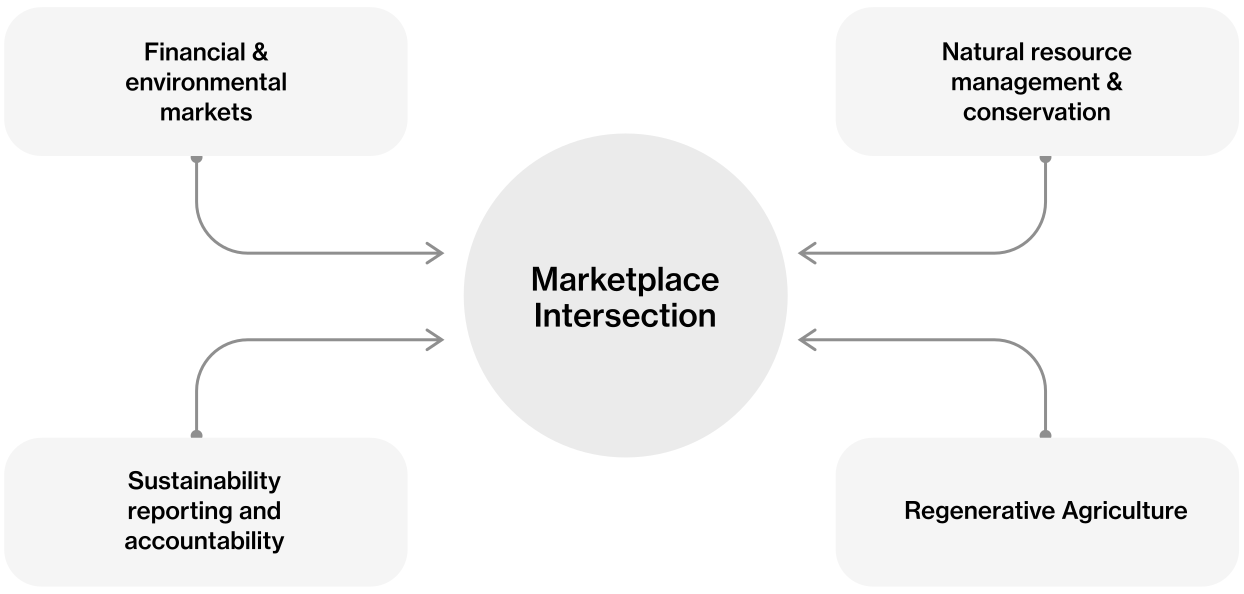
RFM didn't just create a new agricultural service or environmental market platform. It fundamentally reconfigured how innovation happens across multiple previously disconnected domains: regenerative agriculture, natural resource management, environmental markets, green finance, and supply chain sustainability.
Through detailed process research, the study revealed entrepreneurial ecosystem work—specific micro-practices that entrepreneurs deployed across three developmental stages.
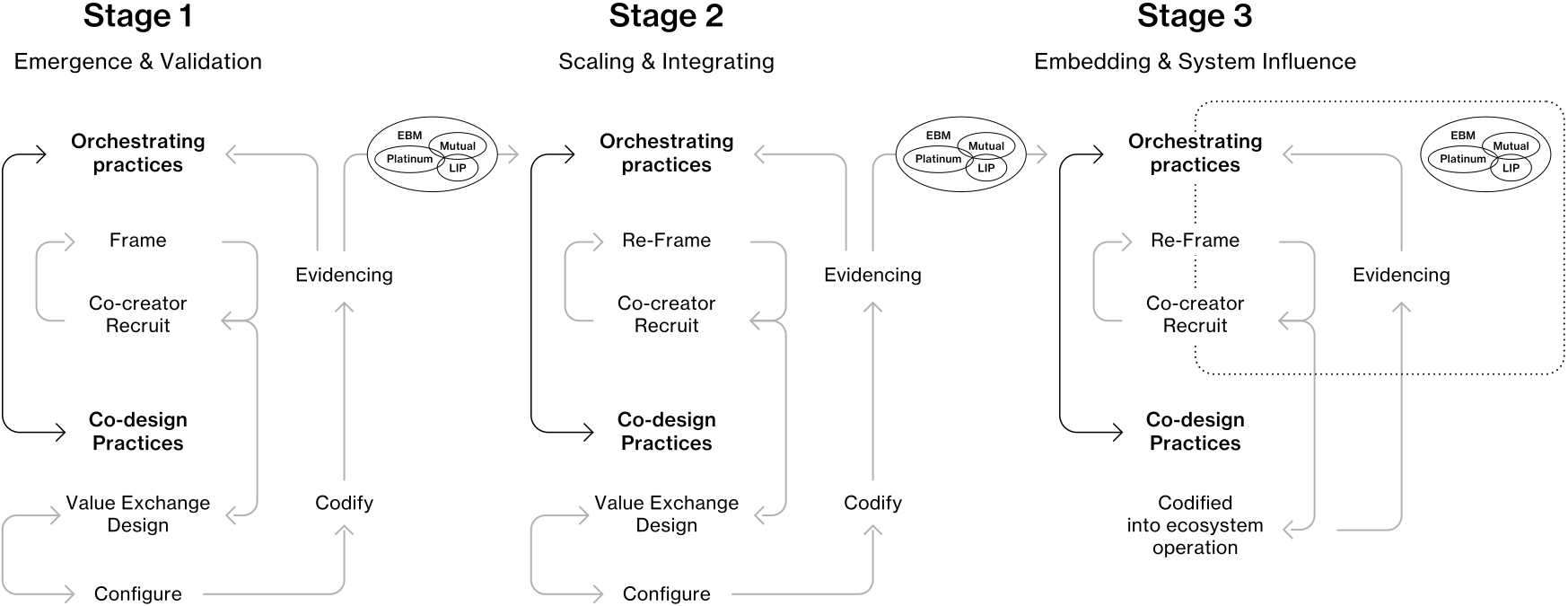
Most significantly, RFM demonstrated multi-level impact simultaneously. For example, in stage 1 – emergence and validation, we noted:
• Micro: Individual farmer empowerment and capability building
• Meso: New market mechanisms and institutional partnerships
• Macro: Policy shifts and system-wide transformation
The case revealed that meta-innovation is much more than a theoretical abstraction—it's enacted through specific entrepreneurial practices that coordinate transformation across organisational, ecosystem, domain, and socio-technical boundaries.
Taken together, the three papers revealed a phenomenon that transcended their individual contributions:
Paper 1 showed what was changing—four expansionary dimensions transforming innovation from competitive tool to collaborative force, from static outcome to dynamic process, from localised impact to systemic transformation.
Paper 2 showed how it manifests—three configurations with potential for cross-configurational orchestration, pointing toward a higher-order capability.
Paper 3 showed how it works in practice—concrete entrepreneurial practices generating impacts across multiple levels and domains simultaneously.
This progressive revelation led to the articulation of meta-innovation as a distinct construct:
… as the deliberate design and orchestration of multi-level innovation processes across technological, social, environmental, and economic dimensions to realise integrated solutions or higher-order visions that transcend organisational and domain boundaries and transform multiple interconnected systems simultaneously.
Meta-innovation represents the next frontier—not replacing previous innovation approaches but providing the higher-order framework needed when transformation must span multiple domains, levels, and systems simultaneously.